


Duet Dating App: Chat & Meet
3.82.78K Reviews
App Specs
- Version
- 2.77.1
- Updated On
- License
- Free
- Downloads
- 1,000,000+
- Developer
- Duet - Meet People You Resonate With
- Categories
- Social
- Platform
- Android
Screenshots


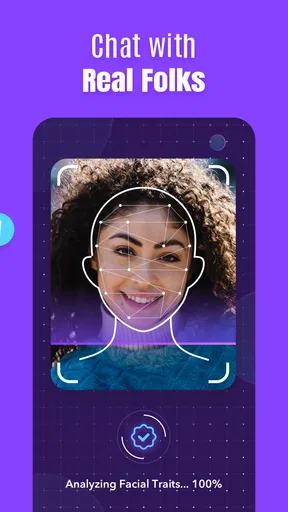

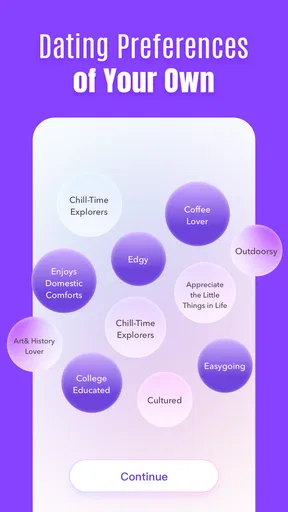
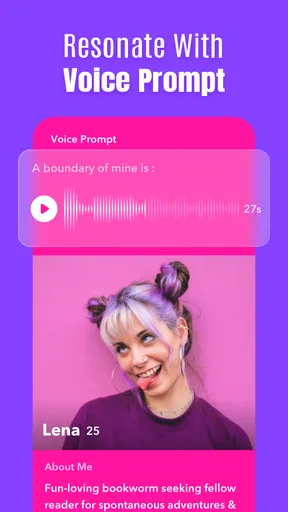
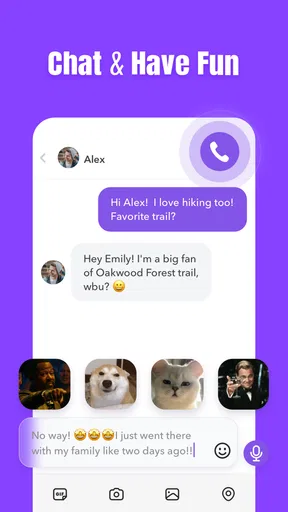
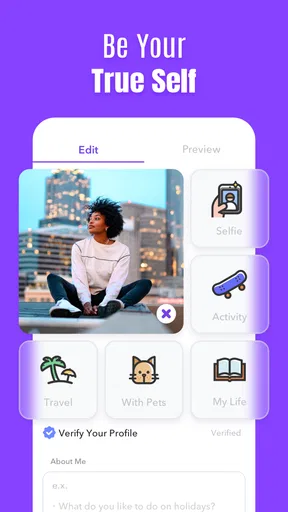
 Analysis by AppCompare
I approached Duet Dating as a social app for people who want to meet someone new through conversation rather than treating dating as a quick sequence of profile swipes. Its focus is simple to understand: connect with people you resonate with, start chatting, and decide whether a real connection is worth pursuing. After spending time with it, my main impression is that it works best when one person uses it deliberately on their own phone, with clear boundaries around privacy and time.
That last point matters more than it might seem. Dating apps are personal spaces, and this one is not designed for casual household sharing. If you are considering it on a phone used by several people, or wondering whether it fits a family tablet, I would be cautious. The app carries a Mature 17+ age rating, and conversations, matches, and notifications belong to the individual account holder. It is much better treated like a private diary or messaging app than like a shared social feed.
What using Duet Dating feels like in everyday life
The app comes from Duet - Meet People You Resonate With, and it sits in the social category rather than presenting itself as a general-purpose messaging tool. The store summary describes its purpose as resonating and dating with a new match, while the short description calls it Duet Dating. In practical terms, I found that its value depends less on opening it constantly and more on how thoughtfully I handled each conversation.
A realistic use case is someone who has a busy weekday routine and does not want dating to become another full-time task. You might check the app after work, look through potential matches, respond to one or two conversations, and then close it instead of leaving it open throughout the evening. That approach makes the experience feel manageable. It also helps you notice whether someone is genuinely engaging with you or whether you are simply collecting inactive chats.
I would not describe it as a replacement for meeting people in person. It is a starting point. The useful transition is from an initial match to a conversation that reveals whether both people communicate comfortably. That means your own messages matter. A short greeting may be easy to send, but a specific question or a response that refers to something in the other person’s profile gives the exchange a better chance of becoming meaningful.
The app can suit people who are open to meeting someone outside their existing circle, especially those who prefer having a little time to think before replying. It is less appealing for anyone who wants an entirely anonymous browsing experience, instant results, or a dating service that feels like a large public community. The social design is centered on personal matching and conversation, not on broadcasting your life to everyone.
Why a private phone matters more than a shared screen
In a household, it is tempting to leave a dating app installed on whichever device is available. I would avoid that. A shared phone can expose notification previews, recent conversations, profile details, or an open session to another person. Even if nobody intends to invade your privacy, accidental visibility is enough to create an uncomfortable situation.
Worth Reading Before You Choose

EA SPORTS FC Mobile 26 Is a Bigger Football Game, but It Takes Time

Flipboard Shows What News Apps Must Do Beyond the Feed

Switching to Android Auto Means Rethinking Your Driving Routine

Google Calendar Makes a Crowded Week Easier to Manage

Ludo King Makes the Most of the Minutes Between Plans

Baby Panda World Brings Quick Play to Modern Phones, but Its Game Library Feels Busy
My practical recommendation is to keep the account on the user’s own device and avoid handing that device around while the app is open. If you use a family tablet or a phone that children sometimes borrow, dating content can appear at the wrong moment. The Mature 17+ rating makes this especially important: the app should be used by an appropriate adult or older teen within the rating’s intended context, not treated as a household entertainment app.
This also affects coordination. If two adults in the same home both use the service, they should keep their accounts clearly separate and avoid assuming that a notification or message belongs to the other person. Do not rely on a shared login, and do not let another household member manage conversations for you. Dating decisions are personal, and mixing accounts can make even simple communication confusing.
The best household boundary is straightforward: one person, one private account, one clearly controlled device. That is not a special feature claim; it is simply the safest way to use a service built around personal identity and private conversations.
Setting expectations before creating an account
Before installing it, I would ask what you actually want from a dating app. If your goal is to meet people who share your interests and gradually see whether conversation develops, the concept makes sense. If you are only looking for casual browsing, you may find the process less rewarding because a match is not the same as compatibility.
It helps to decide in advance how much personal information you are comfortable sharing. I would begin with broad interests and everyday preferences rather than revealing your workplace, home address, regular route, or other details that make you easy to locate. A profile should give someone enough to start a natural conversation without functioning as a map of your life.
Another useful boundary is time. Dating apps can encourage repeated checking, especially when you are waiting for a reply. I found that setting a small routine works better than reacting to every notification. Check messages when you have the attention to answer properly, and leave the app when the conversation begins to feel forced. This keeps the experience from taking over the rest of your evening.
There is also an emotional boundary worth setting. A promising chat can still end without explanation, and a match can lose interest. I would treat early conversations as exploration rather than commitment. That mindset makes it easier to judge the quality of the interaction instead of attaching too much meaning to a single reply.
How to turn a match into a useful conversation
The strongest workflow I found was to move slowly through three stages: notice a possible point of connection, ask something that invites a real answer, and then watch whether the other person contributes equally. This is more informative than sending several generic messages in a row.
For example, if a profile mentions an interest you genuinely share, respond to that detail and add a small piece of your own experience. Then ask a question that cannot be answered with only “yes” or “no.” The point is not to perform or write a perfect introduction. It is to create an opening where both people can show personality.
A less obvious benefit of this approach is that it exposes effort levels early. Someone may be pleasant but consistently give one-word replies. Another person may write longer messages but never ask anything back. Neither pattern automatically makes them unsuitable, but both tell you something about how the conversation may feel later.
I would also avoid moving immediately to another messaging service just because the first few messages seem exciting. Keeping the early exchange within the dating context gives you time to assess consistency. If you do decide to continue elsewhere, do it because you are comfortable, not because the other person creates urgency.
Coordination becomes important when a conversation reaches the point of planning a meeting. Keep the first plan simple, public, and easy to leave. Tell a trusted person where you are going and when you expect to return. Arrange your own transport when possible, and do not let a new match pressure you into changing the location at the last minute. These are sensible dating habits, but an app review should say them plainly because the transition from chat to real life is where the biggest practical risks appear.
Age context, trust, and the limits of digital chemistry
The Mature 17+ rating should shape how families think about this app. I would not install it for a child to explore, and I would not assume that a shared household device makes supervision simple. A parent or guardian may need to discuss age-appropriate internet behavior separately, but the app itself should not be treated as a substitute for that conversation.
For adults using it, trust still has to be earned gradually. A profile can suggest common interests, but it cannot prove that every detail is accurate. I would look for consistency across messages: does the person answer reasonable questions, respect a boundary, and accept a slower pace? Those signals are more useful than an intense first exchange.
One concrete warning sign is pressure around secrecy. If someone insists that you hide the conversation from everyone, demands private images, or tries to make you feel guilty for saying no, I would end the interaction. The same applies to requests for money, account access, or personal documents. A dating match is not entitled to any of these things.
Another important distinction is between privacy and secrecy. Keeping your account private from casual household access is sensible. Hiding an in-person meeting from every trusted person is not. I prefer a setup where the account remains personal while a friend or relative still knows enough to help if plans go wrong.
The app’s social premise may encourage people to focus on resonance, but resonance should not be confused with proof of trust. Someone can share your humor or interests and still be unreliable. I found the service more useful when I treated shared interests as conversation starters, not as evidence that a person was automatically safe or suitable.
Free access and where the value question appears
Duet Dating is free to install and use at its basic level, which makes it easy to try without committing money first. The app includes optional in-app purchases ranging from $4.99 to $359.99 per item. That is a wide span, so I would be careful before buying anything and would check exactly what an offered purchase does before confirming it.
My advice is to use the free experience long enough to answer practical questions: Are there people you would genuinely want to talk to? Do conversations feel respectful? Does the matching style suit you? If the answer is no, paying will not fix the underlying mismatch.
There is a psychological trade-off with paid dating features. Spending money can make a user feel invested and encourage more frequent checking, even when the conversations are not improving. I would set a personal limit before purchasing and avoid treating payment as a way to force a particular outcome. No purchase can guarantee chemistry, a reply, or a successful meeting.
Compared with completely free social networks, the advantage here is a clearer dating purpose. Compared with established dating alternatives, the attraction is the emphasis on finding people you resonate with rather than simply scanning a large stream of profiles. The trade-off is that the experience may feel narrower if your local or preferred dating pool is small. A broader service may be better if your first priority is maximum variety, while Duet Dating is more suitable if you prefer a focused environment.
Performance, maturity, and what the numbers suggest
The app was released on February 28, 2023, and its current version is 2.77.1, requiring Android 10 or later. It has passed one million installs, so it is not an obscure experiment with no visible user base. At the same time, its average rating is 3.7 from around 6,800 ratings, with roughly 2,800 written reviews. I read that combination as a reason to try it with measured expectations rather than assuming it will suit everyone.
A rating in that range usually points to a mixed experience: some people find the central idea useful, while others run into issues involving matching, communication, expectations, or the general fit of the service. I would not use the install count alone as proof of quality, and I would not dismiss the app because it lacks a near-perfect score. The important question is whether its approach matches what you want from dating.
The Android requirement also matters for households. If an older shared device cannot run Android 10, installing it may not be possible there. More importantly, I would not choose a shared device simply because it meets the technical requirement. Compatibility is only one part of a sensible setup; account privacy and age context matter just as much.
Because the app is free to start, the most reasonable evaluation is personal and practical. Install it on a private, compatible device, create boundaries before you begin, and judge the quality of actual conversations rather than the promise of a match. That approach limits both financial and emotional overinvestment.
Who should use it, and who should choose something else
I can recommend giving it a try if you want a dating-focused social app, enjoy learning about people through conversation, and are willing to move at a sensible pace. It is particularly reasonable for someone who wants an alternative to treating dating like a rapid-fire catalog. The free starting point lowers the barrier to testing the experience.
I would skip it if you need a service built for family sharing, child-friendly discovery, or transparent household coordination. The Mature 17+ context makes those uses inappropriate. I would also look elsewhere if you want a large public community, professional networking, or a platform where dating is only a minor part of the experience.
People who dislike uncertainty may become frustrated here, as they can with any dating app. A match may not answer, a conversation may fade, and a shared interest may not lead anywhere. If you need immediate, predictable results, a dating app is probably the wrong tool altogether. Meeting people through friends, local activities, or interest groups may be a better fit.
On the other hand, if you are comfortable making your own judgments and protecting your personal information, the app can provide a useful starting point. I would compare it with alternatives based on the kind of discovery you prefer: Duet Dating for a more resonance-and-conversation-oriented approach, a broader dating service for reach, or an ordinary messaging community for social contact without an explicitly dating-first purpose.
My household verdict after using it
My final view is positive but careful. Duet Dating has a clear purpose, a free entry point, and a social approach that can feel more personal than endlessly browsing profiles. Its best moments come when two people use the match as an opening for thoughtful conversation and respect each other’s pace.
The app is not something I would place on a shared family device, lend to another household member, or introduce to anyone below its Mature 17+ context. Account boundaries are essential, and coordination should mean planning safe communication and meetings—not sharing passwords or managing another person’s conversations.
With the optional purchase range in mind, I would start free, establish a time and spending limit, and pay attention to behavior rather than promises. The current version and Android 10 requirement make it worth checking device compatibility before installing, but technical access should never override privacy.
My recommendation is to try it privately and patiently if you want dating conversations built around common ground. Use it as a tool for discovering whether a connection deserves another conversation, not as proof that a match is trustworthy or guaranteed to become a relationship. For the right adult user, that balanced approach is where Duet Dating makes the most sense.
Pros
- Quick sign-up makes it easy to start browsing profiles.
- Chat tools help keep conversations organized with potential matches.
- The interface is simple enough for first-time dating-app users.
- Useful discovery options can help narrow down compatible profiles.
- Available on mobile
- making it convenient for dating on the go.
Cons
- The quality and number of matches may vary by location.
- Some features may require a paid subscription or in-app purchases.
- Profiles may not always contain enough detail to judge compatibility.
- Notifications can become distracting when conversations are active.
- As with any dating app
- users should stay alert for fake profiles and scams.
FAQs for Duet Dating App: Chat & Meet
What is Duet Dating App: Chat & Meet?
Duet Dating App: Chat & Meet is a dating and social discovery platform designed to help people connect with potential matches, start conversations, and arrange dates. Its experience generally combines profile browsing, matching or interest-based discovery, and in-app messaging. Before downloading, remember that available features can vary by country, device, account type, and the app version installed.
Is Duet Dating App: Chat & Meet free to use?
You can typically download Duet Dating App: Chat & Meet without paying, and basic account features may be available at no cost. However, dating apps often place advanced discovery tools, visibility boosts, unlimited interactions, or other conveniences behind subscriptions or in-app purchases. Check the current store listing and the payment screen carefully, including renewal terms, before starting any trial or paid plan.
How do matching and chatting work in Duet Dating App?
After creating a profile, you may be able to add photos, write personal information, set preferences, and browse or receive suggested profiles. Depending on the app’s current design, messaging may become available after a mutual match or through another interaction feature. Keep your profile honest, avoid sharing sensitive information too quickly, and remember that online conversations do not guarantee identity or compatibility.
Is Duet Dating App: Chat & Meet safe and private?
Duet Dating App: Chat & Meet may provide standard tools such as account reporting, blocking, profile controls, and privacy settings, but users should still take responsibility for their safety. Review the app’s privacy policy to understand how profile details, photos, messages, and location-related information are handled. Never send money, share passwords, or disclose financial and identifying information to someone you have only met online.
What should I know before meeting someone from the app?
If you decide to meet a person you discovered through Duet Dating App, choose a busy public location and tell a trusted friend or relative where you will be. Arrange your own transportation, keep your phone charged, and avoid changing plans to a private place at the other person’s request. If anything feels uncomfortable, end the meeting and use the app’s block or report options.


